Showing posts with label CITES. Show all posts

Tuesday, May 8, 2012

Article Review: CIFOR Blog:: New timber tracking tools to bolster global fight against illegal logging

The post iss related to the new tracking method to curb illegal logging through tracing the species DNA that was discussed in the workshop held in Kuala Lumpur, Malaysia.  The studies using DNA market to identify timber species and analyze genetic variation in the forest has been carried out for more than ten years. This system is coherent with the existing  EU FLEGT requirement and Lacey Act that has been debating to minimize the risk of illegal logging timber products to enter EU and US market.

What is it about?
The Global Timber Tracking Network (GTTN) promotes the use of innovative control tools based on the application of DNA and stable isotope research to identify timber species and trace their origins. The Global Timber Tracking Network aims to create a global database featuring genetic and stable isotope markers for commonly traded timber species, a landmark tool designed to reinforce certification standards and legislation and to complement existing paper-based documentation that can be easily falsified. 

How does it work?
Through the DNA and stable isotope markers as the legit information (as indicator in the assessor checklist) enter into the database, where is also accessible to the importers. This  enables to importers to verify the precise species and origin of wood and wood products and provide tangible proof that the products were genuinely derived from a sustainably managed forest or other legally harvested timber.  


How would the wood sample be?
To create the database shall require integrating data generated by different research techniques and that has been collected by scientist working in various location around the world. 


What are the equipment use to test the wood sample, what are the total sample need to quantify and how long does it takes?  
A global standard (i.e.: similar FSC standard) for sampling and lab analysis of genetic and stable isotope data shall be establish in order to ensure the technique used to gather and analyze the data are repeatable and verifiable. 


Any successful pilot project? 
To date, just a handful of projects have created individual databases for certain timber species. 

Malaysia
The Forest Research Institute of Malaysia (FRIM) established an early database of tropical timber species using DNA fingerprinting data. The FRIM database has genetic data for:
  1. chengal (Neobalanocarpus heimii) -IUCN Red List
  2. ramin (Gonystylus bancanus) -IUCN Red List
  3. kempas (Koompassia malaccensis) (Traded Timber Species) (WIP) and 
  4. meranti bukit (Shorea platyclados)  (Traded Timber Species) (WIP)
Currently, the GTTN database shall be test whether the data generated by analyses of wood samples match the stated species and origin on the product label.

Africa
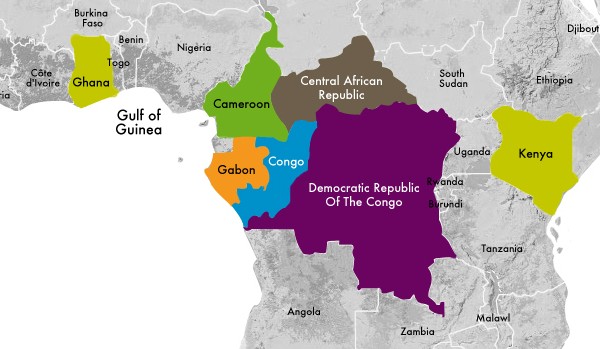
Double Helix will design and implement DNA Chain-of-Custody systems for several supply chains. To achieve this we are actively working with government partners, concession owners/managers and community groups. The project will create DNA barcodes for twenty important African timber species and will generate a map of genetic variation across the different participating countries for three commercial tree species: Ayou (Triplochiton scleroxylon), Iroko (Milicia sp.) and Sapele (Entandrophragma cylindricum). By the end of the project, the trade and Governments will have the ability to verify the species and origin of harvest of these timber species. It will provide a scientific, cost-effective method to verify claims and other supply chain documentation, enforce legislation and exclude illegally harvested timber from being laundered through legitimate supply chains. The genetic reference databases will be held by Bioversity International in Malaysia, the international coordination office for tree identification and origin assignment. Below are the countries covered under this project.
What are the major challenges or obstacle?
In Brazil, a key timber-producing nation believed to have the world’s greatest biodiversity of plant species, correctly identifying timber species is especially challenging, said Milton Kanashiro, a research geneticist at the Brazilian Agricultural Research Corporation (EMBRAPA). “Identifying species is a big problem in Brazil. Different species of trees often end up getting classified under one species because it can be difficult to properly identify so many species in the field,” Kanashiro said. “If species are not identified, we could be losing biodiversity without knowing it. And if you don’t know you are losing a species, you cannot properly protect it.”
My opinion of the major challenges for DNA Timber Tracking:
  1. Reaching agreement on standards may be the most difficult aspect of making the timber tracking system operational.
  2. The research takes time, have not fully define total isotopes needed for isotope marking
  3. At present only covers endanger species, and several tree species have overlaps of isotopes marker.
  4. Questionable about the type of equipment needed for the importer or the require knowledge by the importer to ensure they understand the system and also does not take a very long time to verify the legality of the timber in the port.

Monday, March 26, 2012

Article Review: EIA Post about Ali Jambi

Have you heard of Ali Jambi?  Or perhaps you know him in other names? I had heard of him in 2007 and recently EIA made a special post about him and I summarize the post as below:

Who is Ali Jambi?
Tham Hai Lee, Jambi Lee, Jenggo, Hap Ali - who went from Indonesian timber smuggler to wealthy Singaporean business man. Born in Jambi, Indonesia 1969.

What is he famous for?
Controlled the ramin smuggling trade, making a fortune by ferrying the stolen wood across the Melaka Straits to Malaysia and Singapore. An agent define him “the ramin king”, earning his first million dollars by the time he was 30 and operating a fleet of 60 small wooden ships ferrying illegal timber from Sumatra. He was also said to hold a senior position in an organised crime gang.

What is Ramin?
Also know as Gonystylus, hardwood trees native in Malaysia, Singapore, Indonesia, Brunei, the Phillippines, and Papua New Guinea, highest species diversity on Borneo. Other names includes melawis (Malay) and ramin telur (Sarawak).
*Photo source: http://www.japanfocus.org/-Raffi-Khatchadourian/2918* 

Why is Ramin prohibited from harvesting?
Ramin is highly vulnerable to over exploitation, regenerates poorly and has never been successfully grown in plantations; illegal harvest practices destroy habitat, making population regeneration unlikely; ramin forests are also important habitat for orangutans and other endangered species.

What is ramin wood famous for?
The white wood, harder and lighter in colour than many other hardwoods, is often used in children's furniture, window blinds and making dowels

When was he (Ali Jambi) spotted / rumored?
In 2000, EIA was investigating rampant illegal logging of valuable ramin timber in Indonesia. Ramin is found in peat swamp areas, and the hotspots for illegal logging were Central Kalimantan and Riau Province, Sumatra. And later, his name appeared on a list issued by the country’s Ministry of Forestry of the top 12 illegal bosses in Indonesia. 

And, his past activities for the past ten years, below illustrated base on the EIA post
2000- EIA was investigating rampant illegal logging of valuable ramin timber in Indonesia.
 
2001- Police in Riau claimed to have completed investigations into Ali Jambi’s ramin racket (an illegal or dishonest scheme for obtaining money), but company records obtained by EIA show that by then he had decamped to Singapore – a favoured bolt-hole for Indonesian fugitives with plenty of spare money in their pockets. In another words, he got away. 

2003- EIA monitored series of small ports on the west coast of Malaysia where illegal Indonesian ramin logs from Sumatra were being landed. 50,000 cubic metres of sawn ramin timber from Sumatra was arriving at the Free Trade Zone of Pasir Gudang a year. Paperwork was provided by the port authorities declaring the origin of the wood as Malaysia and it was then shipped onwards to buyers in Hong Kong and mainland China.

2004- EIA’s campaign to curb flows of illicit timber out of Indonesia was gaining ground. Indonesia had successfully listed ramin on the Convention on International Trade in Endangered Species (CITES), drastically restricting trade, and Malaysia has banned the import of logs from Indonesia. It seemed that Ali Jambi’s ramin smuggling business was on the wane (becoming weaker, less vigorous, or less extensive ).

2006 EIA investigators tracked down one of his main sawmills in the province of Riau, Sumatra. Although the site was inactive, a foreman revealed that the boss, called Jenggo (another of Ali Jambi’s names), had moved to Singapore and that his company was called Ramindo. EIA discovered a Singapore-registered company called Ramindo Sukses Perkasa, with the director named as Hap Ali.

2007- A picture of Ali Jambi (or Hap Ali) was snapped at his house by the EIA team members in Singapore. The image was then published in the report: the thousand headed snake, where it aimed to expose the abject failure of the Indonesian justice system to prosecute the main illegal logging bosses, using Ali Jambi as one of the examples.

What is he doing now?
He has obtained Singaporean citizenship and goes by the name of Tham Hai Lee, according to his ID card. He is still a director of Ramindo Sukses Perkasa, and also of a shipping company called Barlian Shipping and Trading, although he was involved in a civil dispute over this company with allegations of financial impropriety. His business interests are said to span shipping, real estate, sand mining and coal mining, and he is believed to travel regularly to Indonesia, usually entering via the free trade zone island of Batam.

He is one of the example that is living in a luxurious life on ill-gotten gains from illegal logging and yet, untouched by Indonesia's justice system or international legislation.